Plant death tolls

Tuesday, July 27, 2010

So the ensete is still hanging on. I wish that it looked as good as this one that I saw at Plant Delights Nursery last year, but ultimately I think its days are probably numbered. I think I'll probably have to add it to the tally of "plants I've killed" before summer is over.

But thanks to the Plant Delights Nursery E-newsletter that I received today, I don't feel quite so bad about it. Apparently, Tony Avent and his esteemed colleagues have killed their fair share of plants too. Here's what he recently wrote:


"Here at PDN, we’ve celebrated a milestone recently, as our database indicates that we have now passed the 20,000 mark for killing plants. 20,194 dead accessions (different plants) is actually our current total, so don’t even think about complaining that you have a brown thumb. Our dead/alive plant rate now stands around 50%, but since our goal is trialing, experimenting, and learning the possible parameters under which each plant will grow, these numbers are actually a good thing...I’m constantly reminded of the late Dr. J.C. Raulston’s quote, 'If you’re not killing plants, you’re not growing as a gardener.' No truer words were ever spoken."


Amen! This makes me feel at least a little bit better that my beautiful ensete may ultimately wind up in the compost pile. At least I'm only in double digits of plants that I've killed. That five-figure mark is a completely different league.

If you'd like to hear Tony's pearls of wisdom firsthand, subscribe to the PDN newsletter here.

Ensete death march

Friday, June 18, 2010


Sick ensete
Originally uploaded by sassycrafter
Well, it looks like I was right. My beautiful ensete is dying. This is what it looked like after I came home from my out-of-town conference this week. Definitely not good.

I just wish I knew what was going on with it and if there was any way to save it. I'm wondering if nematodes might be the culprit, since they're mentioned in this article. If that's the case, I'm thinking that my best bet would be to get a nematode assay done before I plant another ensete in the same spot.

Front garden progress

Wednesday, June 16, 2010

Earlier this week I blogged about the potentially sick ensete. I figured I might as well share some photos of the other beautiful things that have been going on in the front garden.

First off, the cannas and bananas have been going gangbusters. The 'Red Stripe' canna that I bought at Plant Delights Nursery last September is getting huge, and the 'Intrigue' canna is looking beautiful. The striped canna is 'Bengal Tiger'. It was a generous passalong plant from Tom, along with a dwarf Cavendish banana that's doing splendidly.

Speaking of what I bought at PDN, the chasmanthium seems to have died. Very sad. It turned brown over the winter and I cut it down in spring. It put out a half-inch or so of new growth but then never grew any more. In Southernese, I'd say it up and died.

But back to the pretty stuff. Here are some macro shots of the cannas and bananas for you to salivate over.

Canna indica 'Red Stripe'

Canna indica 'Red Stripe'

Canna 'Bengal Tiger'

Canna 'Bengal Tiger'

Canna 'Intrigue'

Canna 'Intrigue'

Musa acuminata 'Dwarf Cavendish'

Dwarf Cavendish banana

And one of the mystery cannas that we transplanted recently is about to bloom. I'm wondering if it might also be 'Red Stripe'.

Unknown red-flowered canna

Sick ensete?

Sunday, June 13, 2010


Sick ensete?
Originally uploaded by sassycrafter
We planted this beautiful ensete back in April. It's been doing great and has double in height since then. But all of a sudden it's looking a little sick.

It's listing to one side, and the leaves have started wilting. If wilting were the only symptom, I'd wonder if the cause was just the 90+ degree weather we've been having.

Sick ensete?

But the leaves are also looking chlorotic, namely in patches that correspond to where the leaf is sagging.

Sick ensete?

Plus the roots are starting to pop free from the soil, as if they might be decaying.

Sick ensete?

Any ideas what might be going on? I'm wondering if it might be some sort of fungal or bacterial disease. I'd love to be able to treat the problem, but I need to know what's going on before I apply any potential pesticides.

This makes me very sad.

Spring in the Pacific Northwest, Part II

Tuesday, June 1, 2010

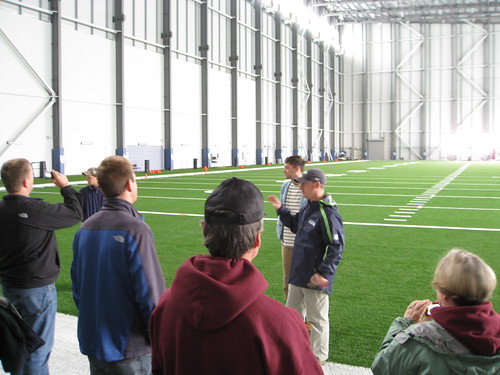
Here's the second post about my recent trip to the Pacific Northwest. After spending time in Portland, we made our way up to the Seattle area. Our first stop was in Renton at the Virginia Mason Athletic Center, aka Seattle Seahawks practice facility. As you all know, I'm much more interested in plants than I am in turf, but even I enjoyed this stop.

We got to peek in the indoor practice field which was HUGE. Nike was filming a commercial of some sort while we were there, so we had to sneak in between takes. The outdoor practice fields had a great view of Lake Washington, but it was pretty overcast that day so my pictures aren't that great.


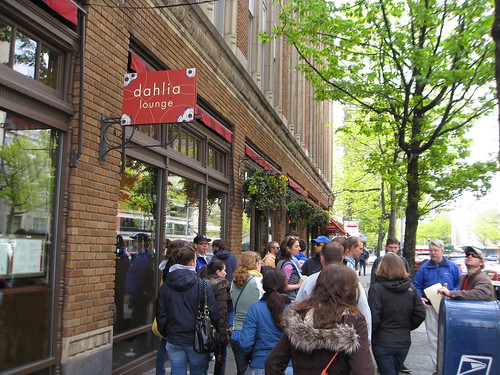
We got back on the bus and headed up to Seattle and met Nolan Rundquist, the city arborist, for a walking tour of the city. It was really interesting to hear about all of the challenges his team faces trying to grow trees in an urban setting. Here's a shot of us on the tour. Of course I just had to put up this particular photo because of the Dahlia Lounge sign, given my love for dahlias.


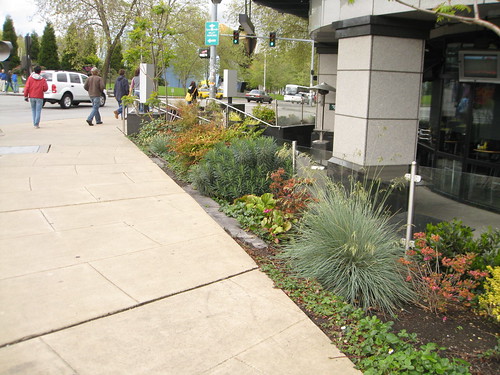
The euphorbias that we saw all over the city were amazing. I wish we could grow these here in Florida, but I've heard that they're prone to powdery mildew.


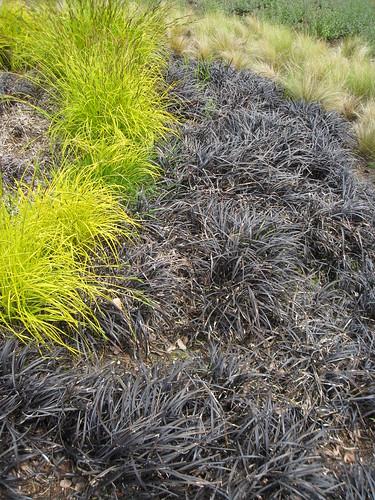
I really loved the color and texture combinations in this bed.


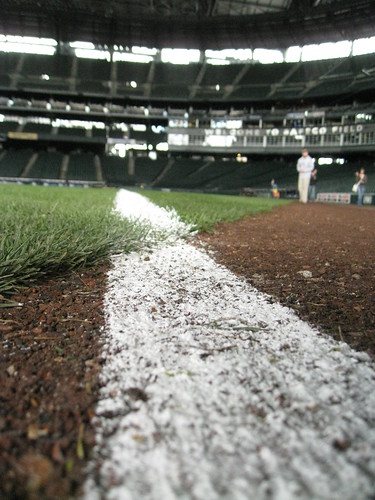
The next day we got a tour of Qwest Field where the Seattle Seahawks play, and a tour Safeco Field where the Seattle Mariners play. I have to say, it was pretty freakin' cool to get to walk on the fields. I mean, how many times do most people get do that? Plus, I've been a big baseball fan since I was a kid, so this was a real treat for me. Here's one of my favorite shots looking down the third base line at Safeco Field.


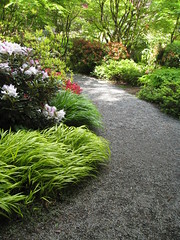
But y'all want to see pictures of plants, right? Fear not! The plant jackpot came when we headed up the road to Bellevue Botanical Garden. It was a delightful garden full of all sorts of fabulous plants in stunning combinations like this one, which I think was a gold sedge and Ophiopogon nigrescens. I'd love to come back and see this garden as it changes from season to season.


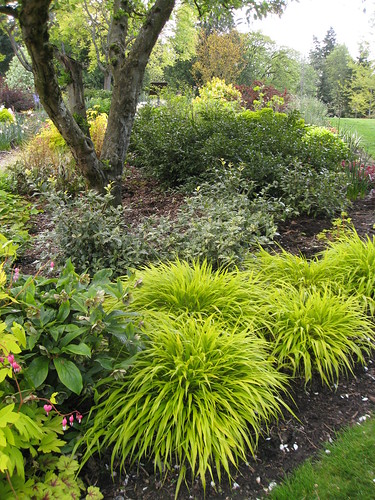
Check out this beautiful Japanese forest grass (likely Hakoenechloa macra 'All Gold'). Isn't it beautiful? Sadly, I've also heard that this one won't thrive here in Florida. Sigh.


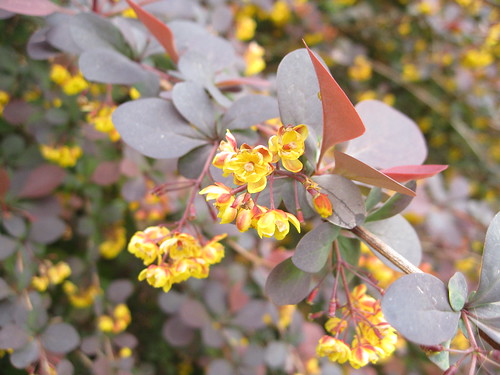
I loved this Cotinus for its striking contrast between the foliage and the flowers. I'm wondering if we can succesfully grow smokebush in Florida. My trusty Southern Living Garden Book says it can be grown as far south as Georgia, but I'm thinking that Florida might be a little too warm for it.


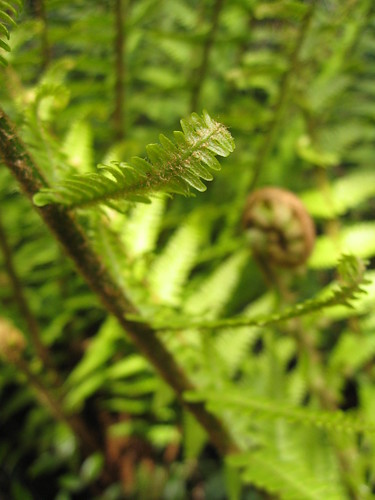
The garden also had tons of ferns, and I've been a sucker for ferns ever since college. They're so primitive and yet so fascinating!


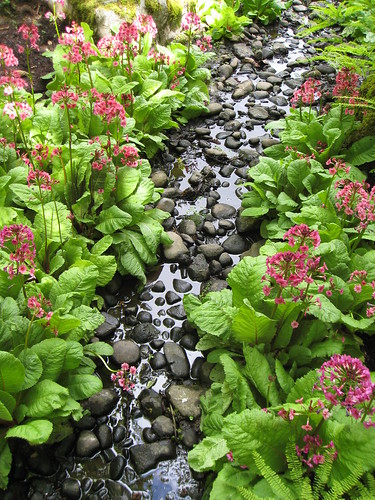
We also saw lots of primroses throughout our journeys in the Pacific Northwest. This was a fairly new plant for me.


Well, that's all for now. The final installment will include the photos I took when we went up to Victoria, British Columbia and visited Butchart Gardens. If you've never seen photos of Butchart, you're in for a treat. I promise the next post will be chock full of bold plant combinations for all of you daring gardeners!

Spring in the Pacific Northwest, Part I

Friday, May 21, 2010

Portland, OR -- The City of Roses
I promised to post about my vacation to the Pacific Northwest, so here goes. I took a lot of photos, so I'll try to pick only the best ones to share with all of you plant lovers. Let's start with the highlights from around Portland, OR -- The City of Roses.

Our first stop was the Nike Worldwide Headquarters campus in Beaverton, OR. We were treated to a presentation by the landscape architect and then had a walking tour of the campus. The landscape was designed with a berm around the entire property, which effectively created a beautiful environment that feels totally separate from the surrounding city of Beaverton.

Allee and fountain at Nike World Headquarters
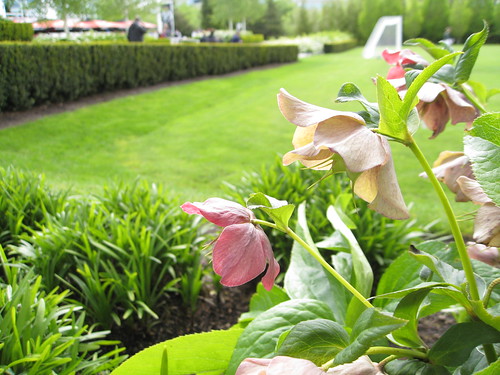
I developed my newest plant crush while we were at Nike: hellebores. I just loved the form of them, and their texture was unique in that it was papery. (Note: a little digging on the internet revealed this because what looks like petals are actually sepals.) We ended up seeing a lot of these throughout the trip in a number of  different shapes and colors.

Hellebore at Nike World Headquarters
Hellebore at Portland Rose Garden
More hellebores at Portland Rose Garden

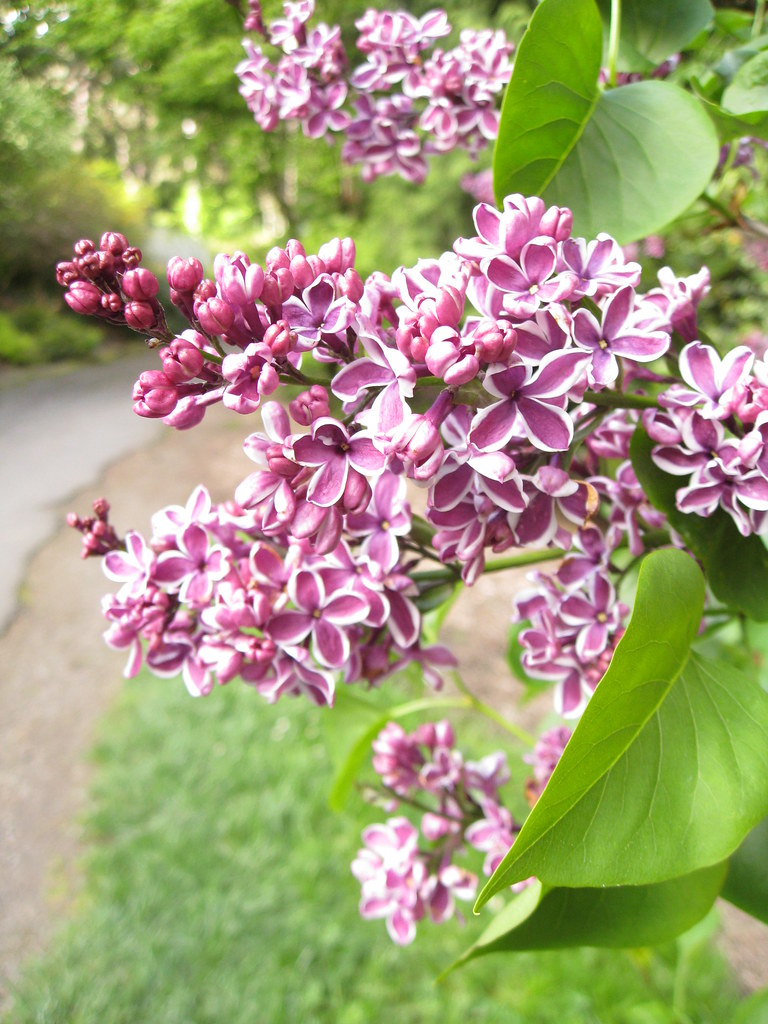
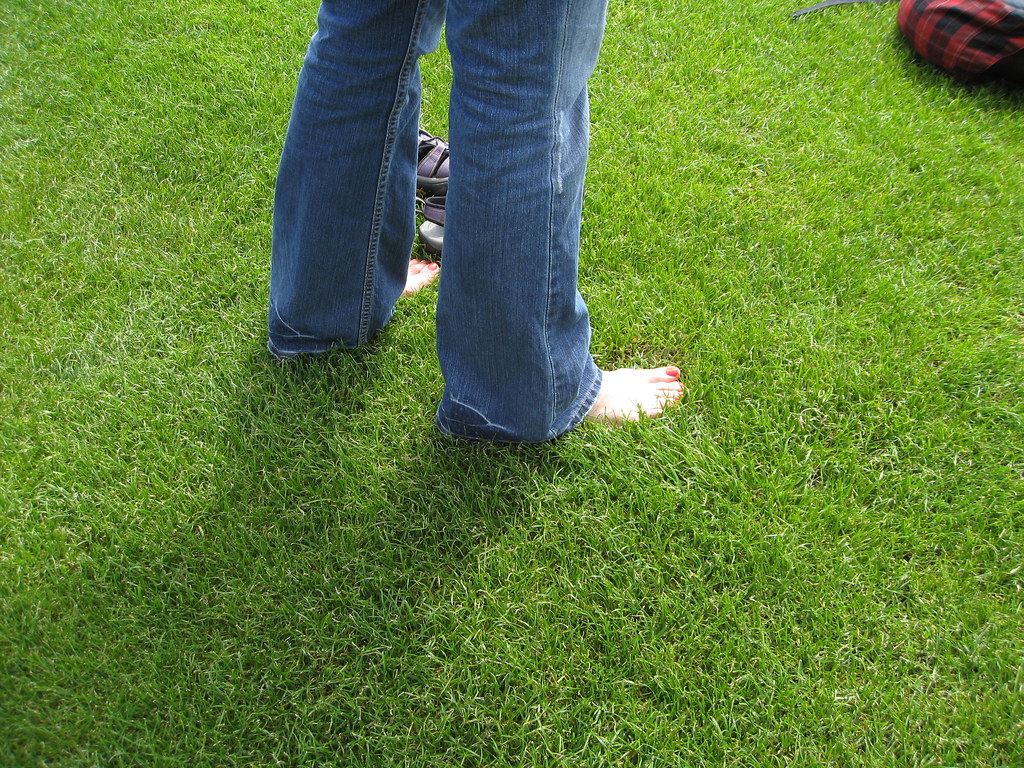
We Floridians had a hard time resisting a few of the perks of spring in Northern climates -- fragrant lilacs and soft, feathery lawns.

Scratch and sniff

Real grass!

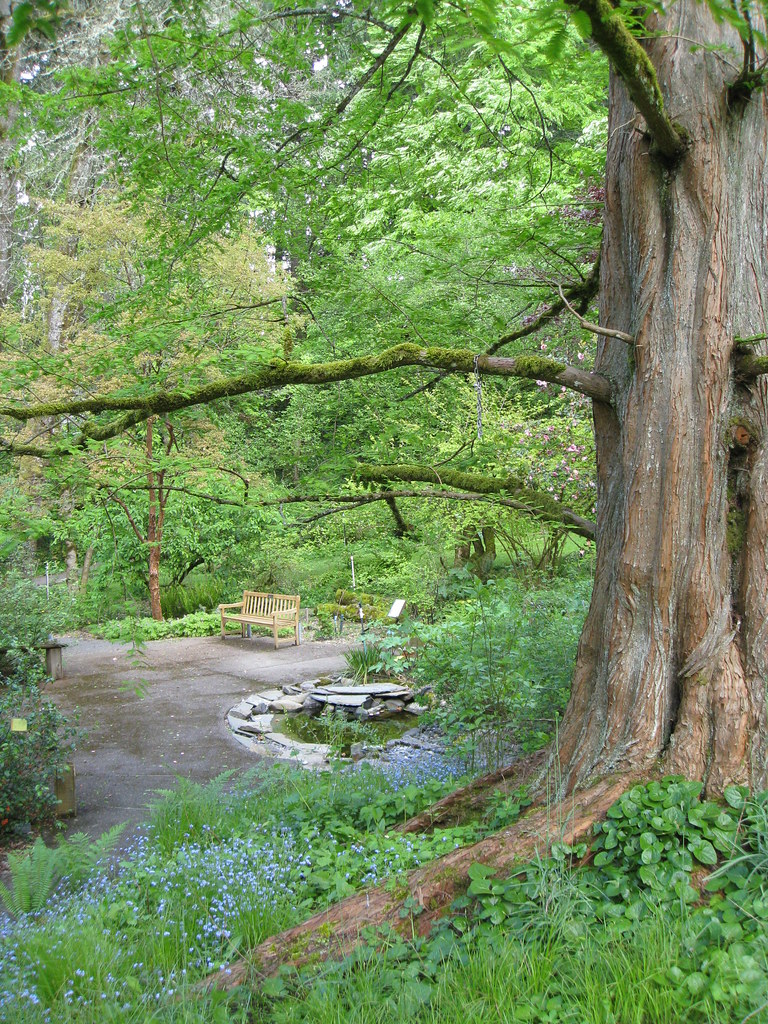
Our next stop was Berry Botanic Garden, which was a truly amazing place for a plant nerd like me. The gardens were originally the private estate of Rae Selling Berry, a plantswoman who collected rare plants from across the globe. After her death in 1976, a dedicated group of people banded together to form "The Friends of The Berry Botanic Garden" to purchase the estate and preserve the gardens. Sadly, financial woes are forcing the garden to close, so it's rather fortunate that we had the chance to see it. Such a shame, really. It's an amazing garden. (For some reason I can't find my pictures of their trough gardens, which were pretty cool.)

Dawn redwood at Berry Botanic Garden
These beautiful blue flowers are on striking three-foot tall stalks. We had seen them at Nike, as well. Our docent at Berry Botanic Garden told us that they're native bulb called Camassia, and that the Native Americans used to eat them.

Camassia at Berry Botanic Garden
And of course, there were tons of beautiful ferns including this lovely maidenhair fern.

Maidenhair fern on nurse log

Then we headed to Washington Park, International Rose Test Garden, and the Japanese Garden where we were set loose to pursue free-for-all, self-guided tours. I'd been to the Japanese Garden before on a previous trip, so Jason and I decided to poke around the rose garden and the park. Plus, it had been a full day and it seemed like it would be nice to just wander and relax.

Amphitheater in Washington Park
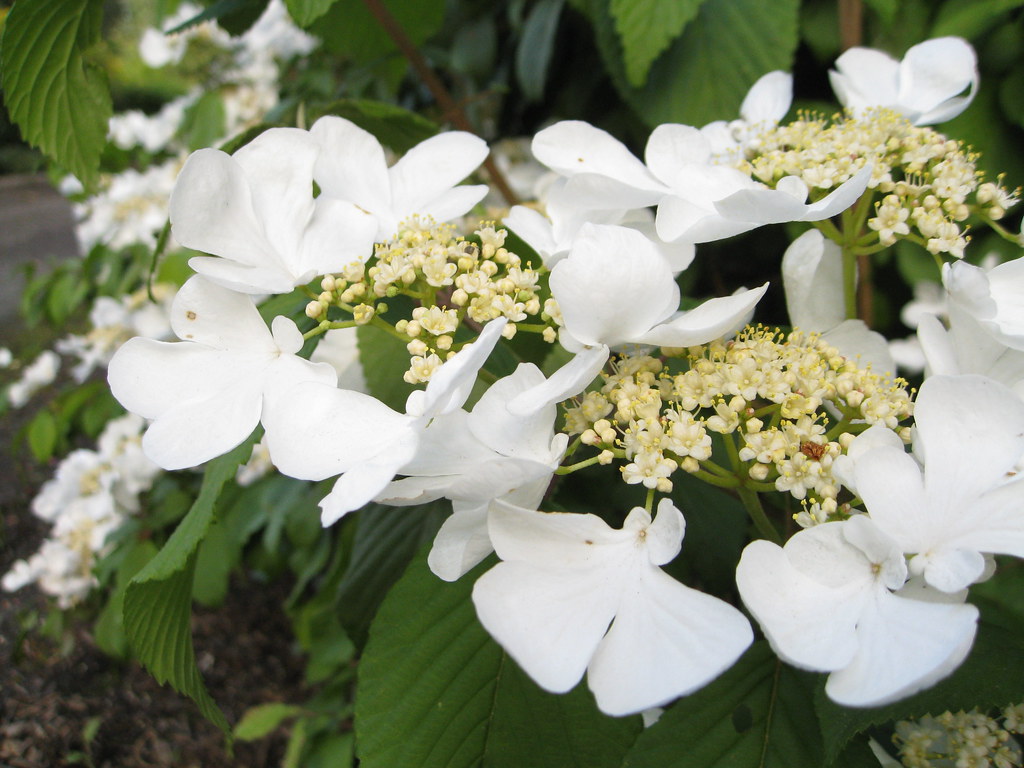
This is where I discovered another one of my other plant crushes -- these large shrubs that put off a wonderfully soft, sweet smell. At first I thought they might be a hydrangea of sorts, but it turns out they're a viburnum.

Viburnum in Washington Park
And here are some of the yet-to-be-blooming roses in the rose garden. I'm imagining what this would look and smell like come mid-summer. Amazing, I'm sure!

Rose garden

Well, that's about all the time I have for now. Here's one last shot from the Portland Rose garden. They actually had what looked like bananas and brugmansias in this garden, but they were pretty puny at this point in the spring and not at all worth taking a picture of. I promise that the next posts will feature more of the bold plant combinations that you've come to expect from Cannas and Bananas.

Sun dial in Shakespeare Garden in the Portland Rose Garden


Perennial underacheiver

Wednesday, May 12, 2010


Amaryllis
Originally uploaded by sassycrafter
You'd think I'd be raving about this beautiful amaryllis. It's a stunning shade of coral and the blooms are at least six inches across.

Truth is, I've been pretty disappointed with this plant because it's been a perennial underachiever in my yard. I planted it back in early 2001 after receiving it as a gift plant just before Christmas. While it's put up plenty of great foliage over the years, it had never bloomed. Until now, that is.

And bless its heart, it was kind enough to open up just before we left for our recent vacation to the Pacific Northwest. By the time we got back, the flowers had wilted down to little wisps.

Speaking of the Pacific Northwest, I shot nearly 400 photos of plants, gardens, and other fun things while I was out there. In the next weeks, I'll  be putting up a few posts highlighting what I saw and revealing my newest plant crush.