Fall Plant Swap
Monday, November 20, 2017Here's a pic of my new babies. I decided to keep put them in my bathroom so that I can keep an eye on them. This spot is more protected from my dogs and kids, and it's the most humid environment I have in my home.
I got cuttings of two different cassias -- one with large leaves (Cassia alata) and one with small leaves (Cassia bicapsularis). I cut back the foliage on the larger cassia after this photo was taken, to help prevent it from drying out before it forms good roots. I also snagged Lady Margaret passion flower (Passiflora x Lady Margaret) and Turk's cap (Malvaviscus pendiflorus), all of these from the same generous gardener. My friend Erin also gave me a small, spiky, vase-shaped aloe and some twee succulents that remind me of little tongues (or even lateral lithops, given the patterning). She said they're some type of Gasteria spp.
Cross your fingers that these babies all make it!
(The little plant on the windowsill is a
Posted by
Kim Taylor Kruse
at
11:22 AM
0
comments
Labels: aloe, canna, gasteria, hibiscus, malvaviscus, passiflora, passionflower, senna, succulent
Canna damage
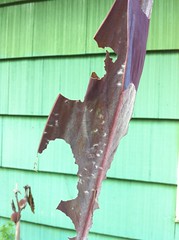
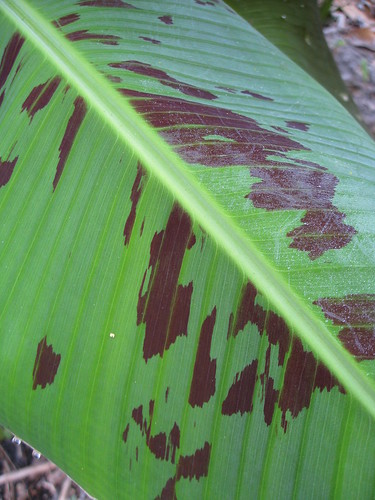
Friday, August 20, 2010If you live in Florida and don't know about canna leaf rollers, then it's time you learned. Most of the people I work with here at UF/IFAS would probably agree that leaf rollers are the most troublesome canna pests in our state. In fact, all of the damage that I found on my plant seemed to be the result of a single critter. Sure, it took me a few days between when I noticed the problem and when I checked it out. But still -- that's a lot of damage for just one caterpillar.
| Larger canna leaf roller (UF/IFAS) |
The lesser canna leaf roller can be a little harder to discover. These caterpillars are much smaller and typically roll themselves up in the edge of a leaf, where they then feed only on the top layer of the leaf.
| Lesser canna leaf roller (UF/IFAS) |
Needless to say, that leaf roller won't be bothering my plants again.
Posted by
Kim Taylor Kruse
at
2:29 PM
5
comments
Front garden progress
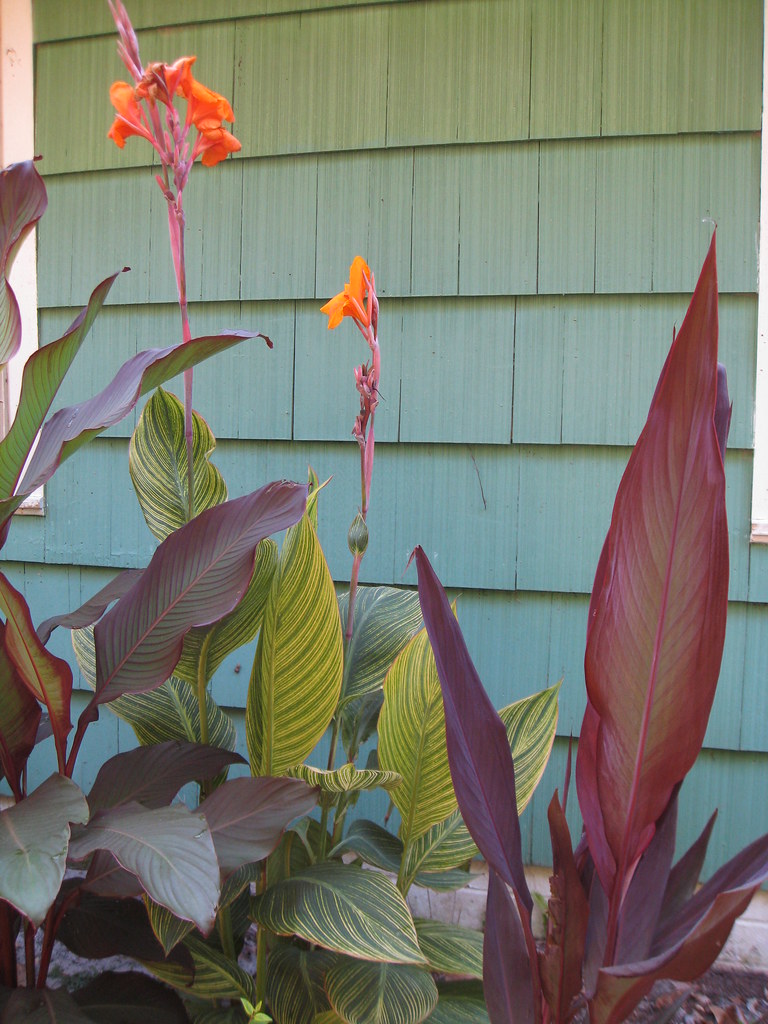
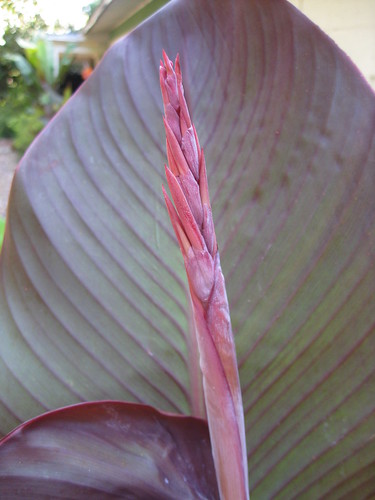
Wednesday, June 16, 2010First off, the cannas and bananas have been going gangbusters. The 'Red Stripe' canna that I bought at Plant Delights Nursery last September is getting huge, and the 'Intrigue' canna is looking beautiful. The striped canna is 'Bengal Tiger'. It was a generous passalong plant from Tom, along with a dwarf Cavendish banana that's doing splendidly.
Speaking of what I bought at PDN, the chasmanthium seems to have died. Very sad. It turned brown over the winter and I cut it down in spring. It put out a half-inch or so of new growth but then never grew any more. In Southernese, I'd say it up and died.
But back to the pretty stuff. Here are some macro shots of the cannas and bananas for you to salivate over.
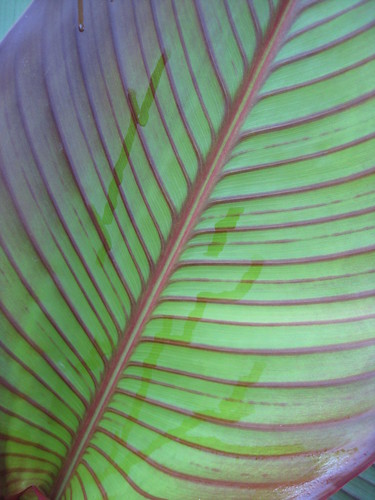
Canna indica 'Red Stripe'

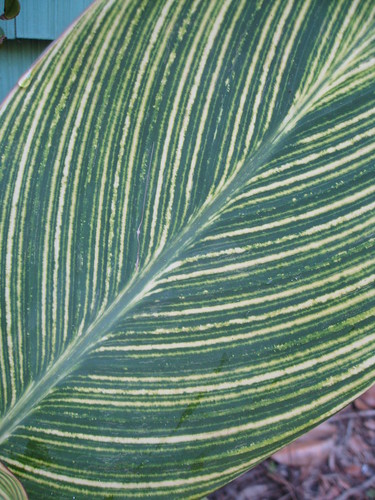
Canna 'Bengal Tiger'

Canna 'Intrigue'

Musa acuminata 'Dwarf Cavendish'

And one of the mystery cannas that we transplanted recently is about to bloom. I'm wondering if it might also be 'Red Stripe'.
Posted by
Kim Taylor Kruse
at
1:49 PM
4
comments
A few of my favorite things, Part I
Friday, October 17, 2008Dahlias? Done that. What else did I see in Portland that was worth blogging about? Here's the first of several posts with the best things I saw in Portland.
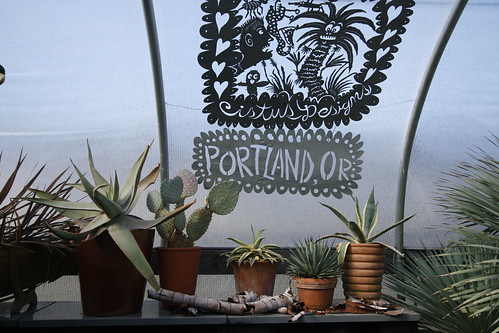
Hands down, Cistus Nursery on Sauvie Island has to be the most fantastical nursery that I've ever seen. If you're ever in the Portland area and have a taste for exotic or unusual plants, you simply must stop in for a visit. How you squeeze all of the plants you crave into your luggage is something that I will leave up to you.
Sign behind service counter
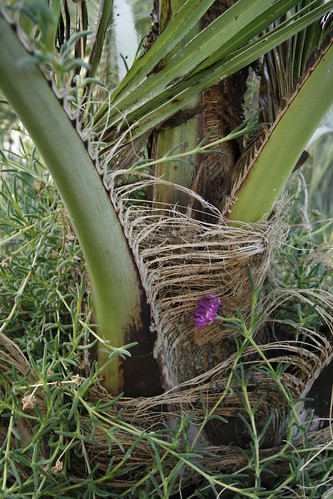
Pindo palm
Click the photo to read the funny story behind where this palm came from.
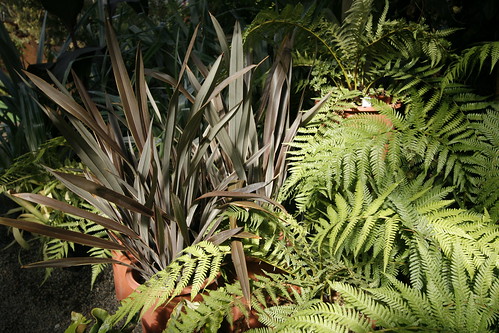
Phormium and ferns
Phormium plants are striking and appeared in almost every garden we visited in the Portland area. Apparently they like the dry summers and moist, mild winters. I've heard they would melt in hot, wet summers in Florida, but I haven't tried growing them myself.
Yucca and agave
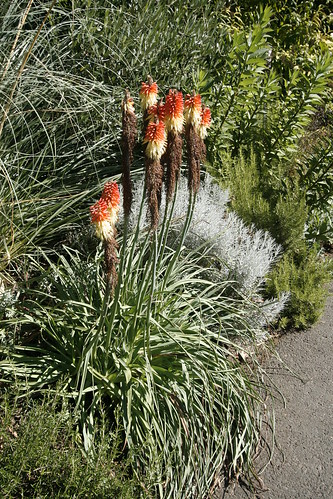
Kniphofia
Brugmansia
This brugmansia appeared with many other tender plants in the Cistus Nursery "Zonal Denial" room.
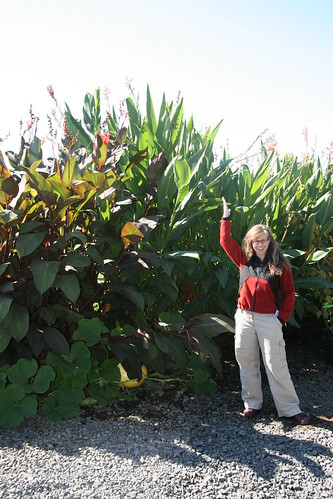
Cannas
How could I resist?
Did I mention how tall these cannas were? Given, I'm only 5'2" so I'm not the best scale, but these must have been 12 or 15 feet tall. I believe that the tallest ones with the small orange flowers were 'Omega', but I'm not certain.
To see all photos I took at Cistus Nursery, click here.
Canna!
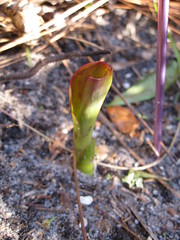
Monday, March 10, 2008My first canna of the season is popping its little head above the surface of the soil. I planted this 'Wyoming' canna on February 17, if memory serves me correctly. We've had two cold snaps since then, but they don't seem to have hindered this little guy's debut into the world.
The 'Wyoming' cannas have striking bronze/burgundy foliage and produce bright orange flowers -- a perfect look for a bold garden!
I also planted some 'Bengal Tiger' canna rhizomes (variegated yellow-green leaves and red flowers, also called 'Pretoria'), three Scadoxus multiflora corms (fabulous red globular flowers), three crinum bulbs (classic pale pink flowers), and some white/green caladiums.
All are in the ground, and so far the cannas and the scadoxus are the only ones popping up. I bought them all at my local Home Depot, but you can also get them through online retailers like Brent and Becky's Bulbs.
By the way, the purple rod you see to the right of the canna is a knitting needle. Since I'm planning to add more plants to the bed, I wanted to make sure that I'd know where I had planted the rhizomes so that I could avoid disturbing them if they were slow to pop up. I have a bunch of old knitting needles on hand, so I figured they'd work great. I was even able to color-code them -- the 'Wyoming' got a purplish-colored needle since it has somewhat purple foliage. If you don't have extra knitting needles at your house, you could also use skewers used for making shish kebabs. They're cheap and readily available at the supermarket.